
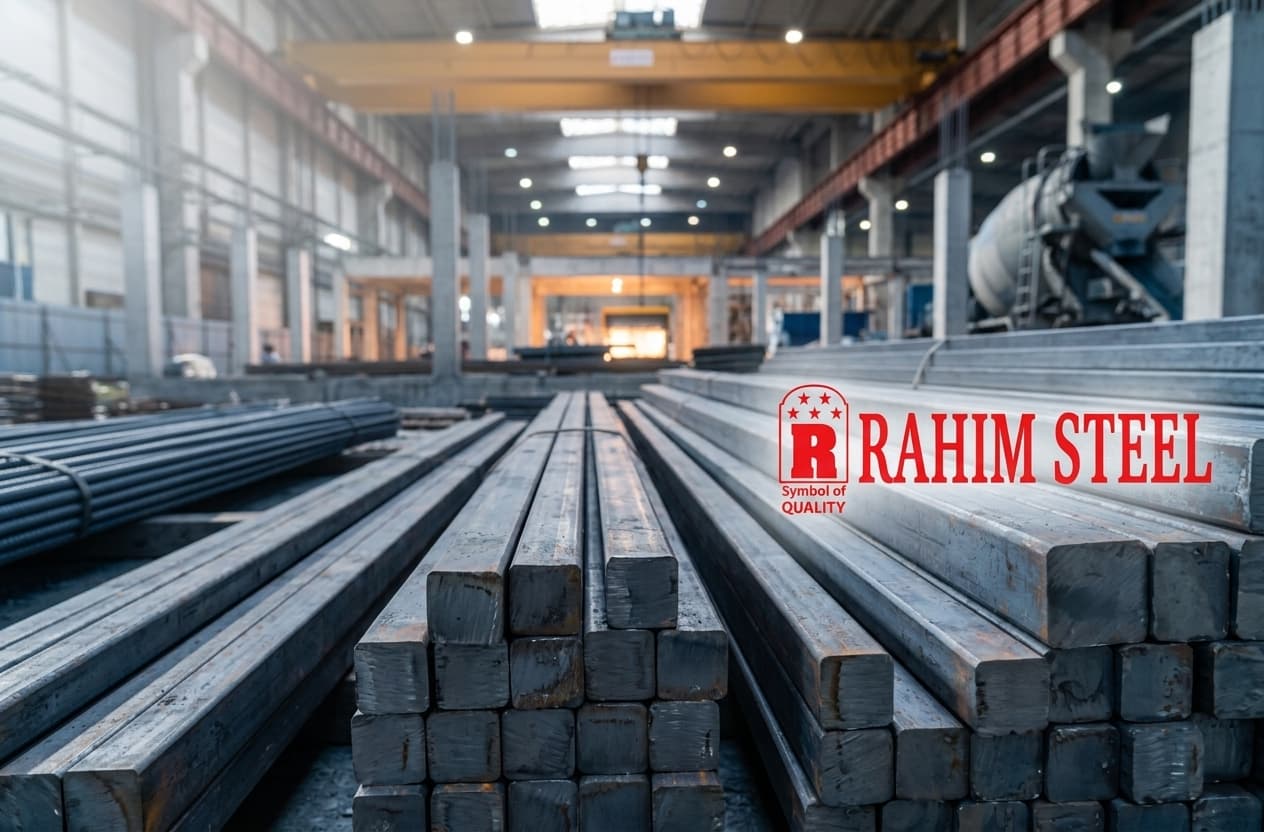
Best Steel in Bangladesh: Rahim Steel Billets Quality and Buying Guide
Best Steel in Bangladesh: A Guide to Rahim Steel Billets
Choosing the best steel in Bangladesh starts with understanding the material your project or manufacturing operation needs. Construction buyers may require finished reinforcement bars, while rolling mills need steel billets as the starting material for producing rods, sections, and other steel products. These are different purchases, and each requires its own specifications.Rahim Steel describes its billets as raw materials for rolling mills, rebar production, and engineering applications. According to the supplied product information, they are manufactured under controlled conditions to maintain consistent chemical composition and dimensions.This guide explores Rahim Steel Billets, their typical specifications, manufacturing process, and purchasing considerations. Rather than declaring any supplier universally “the best,” it focuses on the product characteristics buyers can assess.
Choosing Quality Steel in Bangladesh
Start steel selection with the intended application. A billet purchased for a rolling mill is not the same as a finished reinforcement bar purchased for a building. The required grade, chemical composition, dimensions, and acceptance criteria should match the buyer’s production or project requirements.
For billet buyers, the supplied Rahim Steel information highlights controlled chemistry, uniform dimensions, and surface quality. These are useful points to discuss with the supplier when defining an order. Buyers should request documented specifications rather than relying only on broad descriptions such as “premium quality.”
If you are searching for “rahim rod price bd today,” first confirm whether you need finished rods or steel billets. A rod quotation does not determine the price of billets, and you should not treat the products as interchangeable.
Before requesting a billet quotation, prepare the following information:
- Intended finished product or manufacturing application.
- Required steel grade and chemical composition.
- Billet cross-section and length.
- Total order quantity.
- Delivery location and required schedule.
- Applicable testing and documentation requirements.
Rahim Steel’s supply history traces back to National Foundry, established in Shyampur, Dhaka, in 1958 under founder Al-Haj Abdur Rahim. It also records the establishment of Diamond Steel Products in 1976 and Rahim Steel Mills in Kachpur, Sonargaon, in 1983.
This background provides context for the company’s development, but purchasing decisions should still depend on the specifications and documentation for the actual material being supplied. Company history does not replace batch-level quality checks.
Rahim Steel Billets Explained
Rahim Steel Billets are described as semi-finished steel products used to manufacture TMT bars, rods, structural sections, and other downstream products. The supplied overview states that they are produced through continuous casting, with attention to chemical composition, dimensions, and surface condition.
The product information provides the following typical characteristics:
Property Supplied typical specification
Steel category: Mild or medium carbon steel
Carbon 0.25–0.35%
Manganese 0.40–1.20%
Silicon 0.03–0.50%
Phosphorus ≤ 0.045%
Sulfur ≤ 0.050%
Typical cross-sections 100 × 100 mm to 150 × 150 mm
Typical lengths 4–12 metres
These values are presented as typical product information, not confirmed specifications for every order. Buyers should agree on the required chemistry, dimensions, tolerances, and acceptance criteria before purchasing.
The supplied material also references ISO 6935-2:2016 and ISO 9001-certified production. Ask Rahim Steel to clarify the applicable product standard and provide the relevant certification scope and material documentation. A reference in a product description should not be treated as proof that every batch meets every buyer’s requirements.
The described manufacturing process follows six stages:
Melting and refining: Steel is melted in an induction furnace, with adjustments to composition and impurity levels.
Ladle treatment and deoxidation: The composition is fine-tuned to achieve the required chemistry.
Continuous casting: Molten steel is formed into billets with specified cross-sections.
Cooling and solidification: The cast billets undergo controlled cooling.
Cutting and finishing: Billets are cut to length and inspected before shipment.
Quality control: The supplied description lists chemical analysis, dimensional verification, and mechanical testing.
- Rahim Steel positions these billets as inputs for manufacturing reinforcement steel, angles, channels, rods, and other sections. It also lists machinery, automotive, and engineering applications that require an appropriate steel grade.
- For example, a rolling mill planning to manufacture a particular steel section should specify the required billet chemistry and dimensions for production. Simply ordering “steel billets” leaves important requirements unresolved.
- The supplied description emphasizes consistent downstream processing and finished-product quality. However, evaluate these through agreed specifications and test results, not as unconditional guarantees.
- When reviewing “rahim rod price bd today,” remember that finished rod pricing concerns a different product. For billet procurement, request a quotation specifically identifying the billet grade, dimensions, quantity, and delivery terms.
- Rahim Steel states in the supplied information that its products undergo quality testing and come with material certificates. Buyers should request certificates relevant to their order and confirm they identify the supplied material.
Questions Before Buying Steel Billets
Q: What are Rahim Steel Billets used for?
A: According to the supplied product information, they are raw materials for producing TMT bars, reinforcement steel, rods, angles, channels, and other structural sections. Suitability depends on the grade required for the finished product.
Q: Are steel billets ready for reinforcement installation?
A: No. In this product description, billets are the starting material for downstream manufacturing. They are not presented as finished reinforcement bars ready for installation in concrete.
Q: What makes a billet suitable for my mill?
A: Begin with your production requirements. Confirm the chemical composition, cross-section, length, tolerances, and acceptance criteria with your technical team and supplier. Request documentation supporting the agreed requirements.
Q: How can I check “rahim rod price bd today”?
A: Contact Rahim Steel’s sales team for a dated quotation covering the finished rod product you need. If you require billets instead, request a separate billet quotation. This article does not provide a verified live price for either product.
Q: What should a billet quotation include?
A: Request the product grade, dimensions, quantity, pricing unit, quotation validity, payment terms, and delivery schedule. Ask whether VAT, transportation, unloading, and other applicable charges are included.
Q: What documentation should I request?
A: Ask for the order specification, relevant material certificates, and any agreed test results. Where certification is part of the purchase requirement, request the supporting certificate and confirm its scope.
Q: Can Rahim Steel be called the best steel supplier in Bangladesh?
A: This article does not establish an independent ranking. A more objective approach is to assess whether the supplier meets your requirements for product conformity, documentation, availability, delivery, and commercial terms.
Q: How do I request a quotation?
A: Share your required grade, billet dimensions, quantity, and delivery location through Rahim Steel’s contact page. Review the written offer with your purchasing and technical teams before confirming the order.
Need Steel Experts?
We have our own team of civil and architectural professionals ready to assist you. Just share your requirements with our experts — we’ll be happy to serve you with the right solutions, exactly as you need.
Contact Our Experts