
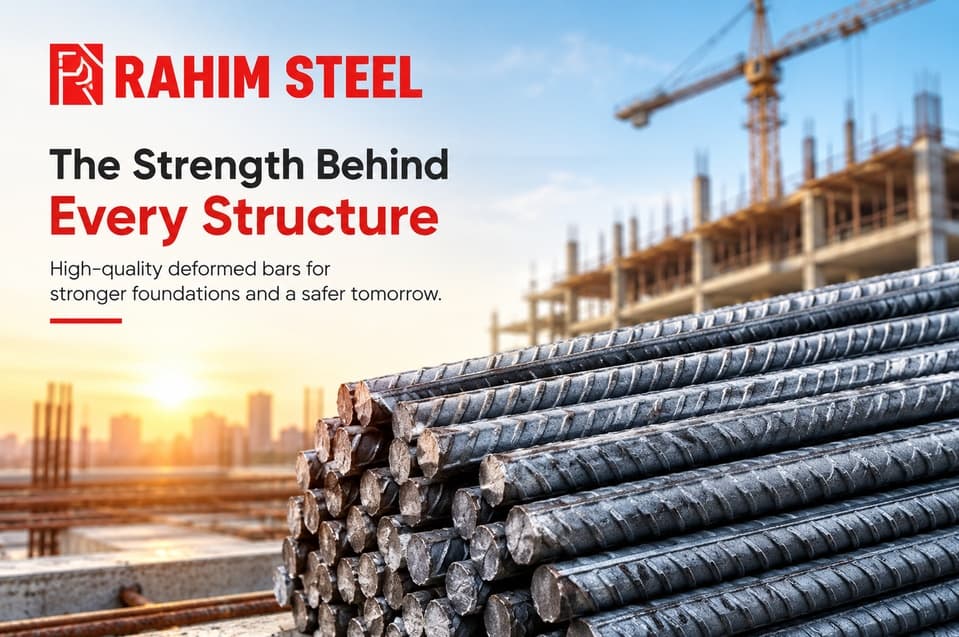
Building Foundations: Why Choosing Quality Deformed Bars Matters | Rahim Steel
From Building Foundation to a Robust Structure: Why is ‘Deformed Bar’ Crucial?
A building’s longevity doesn’t just depend on its architectural beauty; its true strength is born from a robust foundation and reliable structural reinforcement. To give the concrete structure the necessary tensile strength, reinforcement steel is the most vital component. When initiating a construction project, considering the quality, strength, & manufacturing consistency of your steel is non-negotiable.
To ensure your foundation reliably supports the entire structure for decades, selecting reinforcement material according to the specific project requirements is key. This is where Rahim Steel’s 60+ years of manufacturing expertise and quality focused production process prove their worth.
Why are Deformed Bars Essential for Foundation Work?
The foundation is arguably the most critical structural part of any building. While concrete is excellent at handling compressive loads, it needs reinforcement steel to tackle tensile stress. Deformed bars work in harmony with concrete to provide the structural members with the stability & strength they need.
The Mechanical Bond Advantage:
The "deformed" surface of these bars is designed specifically to create a superior mechanical bond with concrete. Whether for foundations, columns, or beams, engineering designs specify reinforcement to ensure the structure holds firm under stress.
However, simply buying steel isn't enough. You must adhere to the project's structural design, grade requirements, and applicable engineering standards. Always consult your structural engineer regarding the specific bar specifications required for your site.
Why Choose Rahim Steel?
Rahim Steel’s journey began in 1958 with the establishment of National Foundry. Over the decades, the company has evolved through continuous steel production, re-rolling, and advanced manufacturing activities. A landmark moment in our history was the 1968 launch of Bangladesh’s first re-rolling mill, which produced the country's first 40 grade deformed bars.
Today, Rahim Steel is an integral part of Bangladesh’s infrastructure, industrial, and commercial sectors. Our focus remains on advanced technology, manufacturing expertise, and an unwavering commitment to quality and reliability.
Key Quality Considerations:
a. Choosing the appropriate grade as per structural design.
b. Verifying product specifications and consistency.
c. Gathering essential chemical and physical property documentation.
d. Selecting a manufacturer with a proven track record.
e. How to Procure Rahim Steel Products
For your construction or infrastructure project, start by defining your technical requirements. Based on your engineer’s structural drawings and specifications, determine the grade, size, and quantity needed. Then, contact Rahim Steel's sales team to discuss product availability & commercial details.
Procurement Steps:
Define Requirements: Determine the type of project, structural needs, and quantity.
Verify Specifications: Cross-check the grade, size, and applicable standards.
Review Quality Docs: Request test reports or relevant quality documentation.
Get Professional Consultation: Confirm requirements with your structural engineer.
Connect with Sales: Contact the Rahim Steel sales team for a quotation and procurement process.
A Note from Rahim Steel Management
Rahim Steel’s founder, Mr. Abdur Rahim, pioneered Bangladesh’s first professional ship-breaking operation in 1983. His vision was to ensure a sustainable supply of raw materials for the national steel industry, a vision that continues to drive us today as we serve the evolving needs of Bangladesh's infrastructure development.
Conclusion
A building’s true power isn't just in the design it begins with a meticulously planned and sturdy foundation. By prioritizing quality reinforcement material and adhering to engineering specifications, you ensure the longevity of your project. With over six decades of steel manufacturing history, Rahim Steel is your partner in building a safer, stronger Bangladesh.
Build with confidence. Build with Rahim Steel.
Frequently Asked Questions (FAQ)
Q1: Why is reinforcement steel needed in foundations?
A: Concrete is strong under compression but weak under tension. Reinforcement steel provides the tensile strength needed to keep the structure stable and safe.
Q2: What is the benefit of a ‘deformed’ surface?
A: The deformed surface improves the mechanical bond between the steel and the concrete, which is vital for preventing slippage in reinforced concrete.
Q3: What should I verify before buying steel?
A: Always verify the grade, size, technical specifications, quality documentation, and the manufacturer's reliability.
Q4: Which grade should I use for my foundation?
A: The specific grade is determined by your structural design, load requirements, and engineering specifications. Always follow your structural engineer’s guidance.
Q5: How can I procure Rahim Steel products?
A: Prepare your project requirements and technical specifications, then contact our sales team to discuss availability and pricing.
Need Steel Experts?
We have our own team of civil and architectural professionals ready to assist you. Just share your requirements with our experts — we’ll be happy to serve you with the right solutions, exactly as you need.
Contact Our Experts