
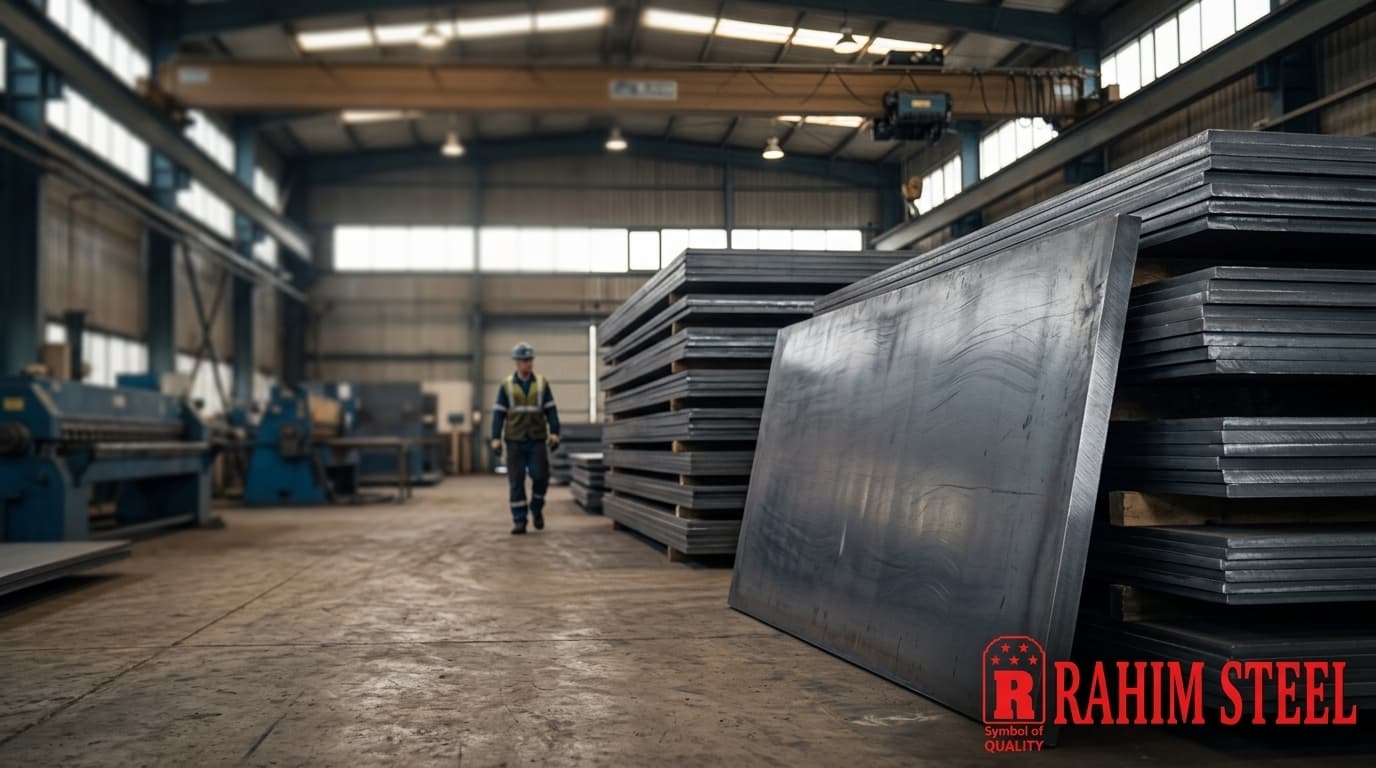
MS Steel Plates from Rahim Steel: A Practical Guide for Project Buyers
MS Steel Plates for Your Next Project: A Practical Buyer’s Guide to Rahim Steel
A steel plate order can look straightforward on paper: choose a thickness, confirm the quantity, and ask for a price. The hard part is making sure the material matches the job. A plate used for a machinery base may have different requirements from one intended for a warehouse framework or a fabrication job.
For buyers sourcing MS steel, the useful questions are practical. What grade does the project require? Which dimensions should be ordered? What documentation will accompany the delivery? Can the supplier confirm that the quoted material matches the engineer’s specification?
Rahim Steel’s MS Plate Commercial GR. 40/A-36 provides a starting point for those discussions. Its product description identifies a hot-rolled plate intended for construction, structural fabrication, and industrial work, with strength, ductility, weldability, & formability among its stated properties.
This guide brings together the supplied product information and the questions worth asking before placing an order.
Beyond the Price: Understand the Plate You Are Buying
A quotation becomes useful only when it describes the right material. Two offers may appear similar, but differences in grade, dimensions, or documentation can make them unsuitable for direct comparison.
Start with the product designation. Rahim Steel lists this plate as “MS Plate Commercial GR. 40/A-36.” Before purchasing, ask the sales team to confirm the exact standard and grade applicable to the material being supplied. Review the designation on the quotation, the material certificate,, and the project specification together.
The supplied product information lists these properties:
| Property | Listed value |
| Minimum yield strength | 250 MPa |
| Tensile strength | 400–550 MPa |
| Minimum elongation | At least 20% |
| Maximum carbon content | 0.25% |
These figures help define the product, but they do not replace a project-specific material requirement. Give the supplier the approved specification rather than asking for a plate based only on its general description.
The supplied information also has a discrepancy: one entry pairs 250 MPa with 50 ksi, while another pairs it with 36 ksi. This guide retains the stated 250 MPa value without repeating the conflicting conversion. Ask Rahim Steel to clarify the specification before using it in purchasing or engineering documents.
What should you check besides strength?
Plate thickness, width, and length deserve the same attention as the grade. Confirm the dimensions required for your cutting plan and ask what sizes are available. If you need custom lengths, discuss that requirement before accepting the quotation.
Rahim Steel's product description also mentions surface condition and dimensional accuracy. Ask how these requirements will be documented or checked for your order, particularly when the plates will enter an existing fabrication process.
Rahim Steel states that its products undergo quality testing and come with material certificates. Request the relevant certificate and have the person responsible for material approval review it against the project requirements.
A useful purchasing rule is simple: resolve uncertainties before the order, not after the plates reach the workshop.
From Workshop Floors to Building Frames: Where the Plate Fits
Rahim Steel lists a broad range of applications for its commercial plate, including building frameworks, general fabrication, machinery supports and industrial structures.
That list helps buyers identify possible uses. It should not be treated as blanket approval for every component within those categories. The project design still determines whether a particular grade and thickness are suitable.
For construction work, the supplied applications include structural frameworks for buildings and warehouses, industrial platforms, structural bracing, and road and bridge projects. When requesting a quotation, share the approved material requirements and the required fabrication dimensions.
For engineering workshops, the listed uses include machine base plates, supporting frames, heavy equipment components, and chassis. Buyers should explain what they are ordering rather than relying on a general request for “commercial plate.” A clear description helps the supplier respond to the actual requirement.
The product information also mentions tanks, shipbuilding, and pressure vessels. These applications deserve particular care when reviewing the material specification. Do not assume that the commercial plate designation alone establishes suitability; obtain the required approval and documentation for the intended use.
How Rahim Steel describes its production process
The supplied manufacturing description follows the plate from melting through final inspection. Steel is melted and refined, cast into slabs, reheated and hot-rolled to the required thickness. Cooling, cutting, levelling and edge trimming follow before inspection and testing.
Rahim Steel describes checks covering chemical composition, mechanical strength, dimensions and surface quality. For buyers, the important connection is between those stated checks and the documents supplied with the actual order.
Ask what information the material certificate contains and how it relates to the plates delivered. This keeps the discussion focused on verifiable order details rather than general manufacturing claims.
The company behind the product
Rahim Steel’s supply history begins with the National Foundry, established in Shyampur, Dhaka, in 1958 by Mr. Al-Haj Abdur Rahim. It records the formation of Rahim Steel Mills Co. (Pvt.) Ltd. in Kachpur, Sonargaon, in 1983.
The same history identifies 2003 as the start of commercial mild steel plate production. These milestones explain the background of the company’s plate business, but purchasing decisions still depend on the current specification, supporting documents, and agreed delivery terms.
Before You Order: Straight Answers to Common Buyer Questions
Q: What is Rahim Steel’s MS steel plate intended for?
A: The supplied product description lists structural fabrication, construction, and industrial applications. Examples include building frameworks, machinery base plates, supporting frames, platforms, and general engineering work. Confirm suitability against the requirements of your particular project.
Q: Is the plate suitable for welding and bending?
A: Rahim Steel identifies weldability, ductility, and formability as product properties. Share your fabrication requirements with the supplier and confirm the material specification with the person responsible for the work. A general product description should not replace approval for a specific fabrication procedure.
Q: What information should I include in a quotation request?
A: Provide the required grade or standard, plate thickness, width, length, and quantity. Include the delivery location, required delivery date and any documentation requirements. If your project has an approved material specification, attach it so the supplier can quote against the same information.
Q: How should I compare quotations?
A: Check that each offer covers the same grade, dimensions, quantity, and documentation. Review delivery terms and ask whether any requested cutting or finishing is included. A lower price is not a like-for-like comparison if the quoted material or scope differs.
Q: What should I do about the conflicting strength information?
A: Ask Rahim Steel to confirm the minimum yield strength and its correct unit conversion in writing. Also ask for clarification on the exact grade designation. Use the confirmed quotation and material documentation when obtaining project approval.
Q: Does Rahim Steel provide material certificates?
A: Its supplied quality-assurance statement says that products come with material certificates. Confirm the certificate requirements before ordering and arrange for the documents to be reviewed alongside the delivery.
Q: How can I contact Rahim Steel about an order?
A: Use Rahim Steel’s contact page for product, project, or service inquiries. Send your requirements together so the sales discussion can focus on availability, specifications, documentation, and delivery rather than repeated requests for missing details. rahimsteel.com
Need Steel Experts?
We have our own team of civil and architectural professionals ready to assist you. Just share your requirements with our experts — we’ll be happy to serve you with the right solutions, exactly as you need.
Contact Our Experts