
Rahim Steel Bangladesh: Billet Specifications, Usage & Company History
Rahim Steel Bangladesh: Billet Specifications, Uses & Company History
Before steel becomes a reinforcing bar, an angle, or a structural section, it begins as material that can be processed into the required shape. Steel billets fill that role, providing rolling mills with the input needed to manufacture a range of finished products.
For buyers researching Rahim Steel Bangladesh, the billet range is worth examining through its specifications, manufacturing process, and intended applications. The company’s product information describes mild- and medium-carbon steel billets produced under controlled conditions, with attention to chemical composition, dimensions, and quality testing.
Steel Billets: Product Specifications and Manufacturing
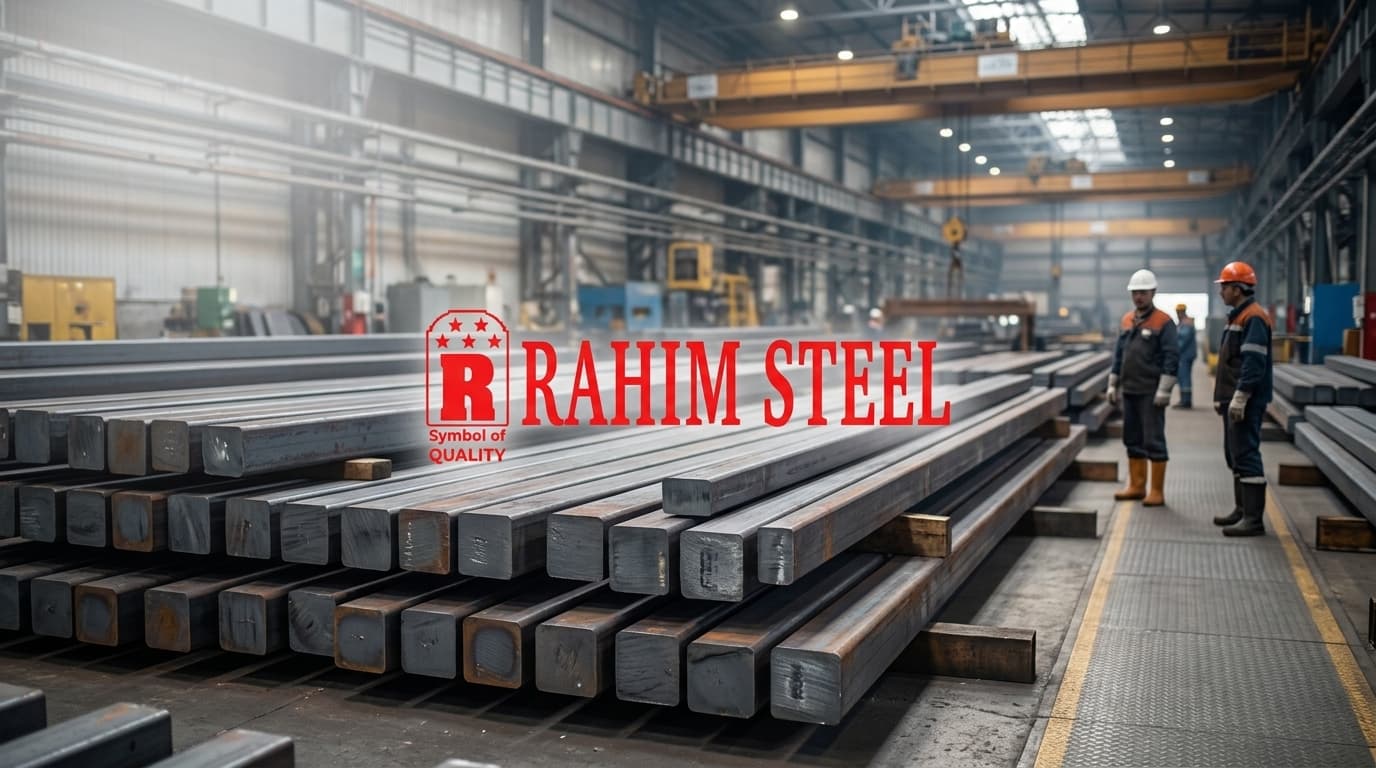
Rahim Steel manufactures billets for rolling mills, rebar production, and other downstream steel applications. According to its product description, Rahim Steel produces the billets through continuous casting using high-quality scrap or molten steel.
The supplied specifications list the following typical values. Buyers should confirm the actual grade and batch requirements when ordering.
| Property | Listed Specification |
| Grade | Mild / medium carbon steel |
| Carbon © | 0.25–0.35% |
| Manganese (Mn) | 0.40–1.20% |
| Silicon (Si) | 0.03–0.50% |
| Phosphorus (P) | Maximum 0.045% |
| Sulfur (S) | Maximum 0.050% |
| Cross-section | Typically 100 × 100 mm to 150 × 150 mm |
| Length | Typically 4–12 metres |
The manufacturing process follows six stages:
- Melting and refining: Steel is melted in an induction furnace, with alloy additions and impurity control.
- Ladle treatment and deoxidation: The composition is adjusted to achieve the required balance of carbon, manganese, and other elements.
- Continuous casting: Molten steel is formed into billets with square or rectangular cross-sections.
- Cooling and solidification: Controlled cooling helps manage internal stress and maintain consistency.
- Cutting and finishing: Billets are cut to length, inspected, and prepared for shipment.
- Quality control: Batches undergo chemical analysis, dimensional verification, and mechanical testing, according to the product information.
The supplied description also mentions ISO 6935-2:2016 and ISO 9001-certified production. Buyers should request the relevant certificates and confirm which product standards apply to their order rather than treating these references as interchangeable guarantees.
Billet Applications and the Company’s Development
The billets are intended for further processing—not direct use as finished reinforcement or structural components. Their listed applications include:
- TMT bars and reinforcement steel.
- Angles, channels, rods and other rolled sections.
- Structural steel production.
- Steel inputs for automotive, machinery and engineering applications.
The required billet specification depends on the finished product. A purchase enquiry should therefore identify the intended application, along with the grade, dimensions, and quantity.
The company’s history begins with its founder, Mr. Al-Haj Abdur Rahim. According to the supplied company timeline, National Foundry was established in Shyampur, Dhaka, in 1958 to manufacture iron and cast products.
Further milestones include:
| Year | Company Milestone |
| 1968 | A re-rolling mill began producing 40-grade deformed bars. |
| 1976 | Diamond Steel Products Co. Pvt. Ltd. was founded. |
| 1983 | Rahim Steel Mills Co. (Pvt) Ltd. was established in Kachpur, Sonargaon. |
| 1984 | A steel plant was established. |
| 2002 | Rahim Energy introduced a 30 MW power plant. |
| 2003 | Production of mild steel commercial plates began. |
| 2004 | The company reports receiving Germanischer Lloyd GL-A certification for shipbuilding-grade plates. |
Alongside its industrial activities, the company describes employment creation, professional skills development, workplace safety, and community engagement as priorities. Its stated community commitments also include support for infrastructure, educational institutions and social welfare programmes.
Questions and Answers for Billet Buyers
Q: What products can be manufactured from these billets?
A: The listed uses include TMT bars, reinforcing steel, rods, angles, channels and structural sections. Billets require further processing, and the selected grade should match the finished product's requirements.
Q: What sizes are listed in the product information?
A: Typical cross-sections range from 100 × 100 mm to 150 × 150 mm, with lengths of 4–12 metres. Confirm available sizes and order-specific dimensions with the sales team.
Q: Are material certificates available?
A: The supplied product information states that products come with material certificates. Buyers should request the certificate for the supplied batch and check it against their purchase specification.
Q: Are the listed chemical values guaranteed for every order?
A: The figures are presented as typical values. The agreed specification and batch documentation should establish the requirements for a particular purchase.
Q: How can buyers request a quotation from Rahim Steel Bangladesh?
A: Buyers can use the company’s contact page to submit an enquiry. Include the required grade, billet cross-section, length, quantity, delivery location, and any testing or documentation requirements.
Q: What information should be confirmed before purchasing?
A: Confirm the intended application, applicable product standard, chemical composition limits, dimensional tolerances, material certificates, delivery schedule, and commercial terms. These details make the quotation easier to assess against the actual production requirements.
Need Steel Experts?
We have our own team of civil and architectural professionals ready to assist you. Just share your requirements with our experts — we’ll be happy to serve you with the right solutions, exactly as you need.
Contact Our Experts