
Rahim Steel Bangladesh: Billets, Quality and Uses Guide
Rahim Steel Bangladesh: A Practical Guide to Steel Billets, Quality, & Uses
Rahim Steel Bangladesh is a long-established steel manufacturer that supplies billets, deformed bars, plates, angles, channels, and other steel products for construction and industrial use. Its billets are mainly used as raw material for TMT bars, rods, structural sections, and engineering products.
For buyers, contractors, rolling mills, & fabricators, the important question is not only where to buy steel, but whether the material will perform consistently after rolling, welding, bending, and installation. This guide explains what Rahim Steel billets are, how they are made, where they are used, and what buyers should check before placing an order.
Why Rahim Steel Billets Matter
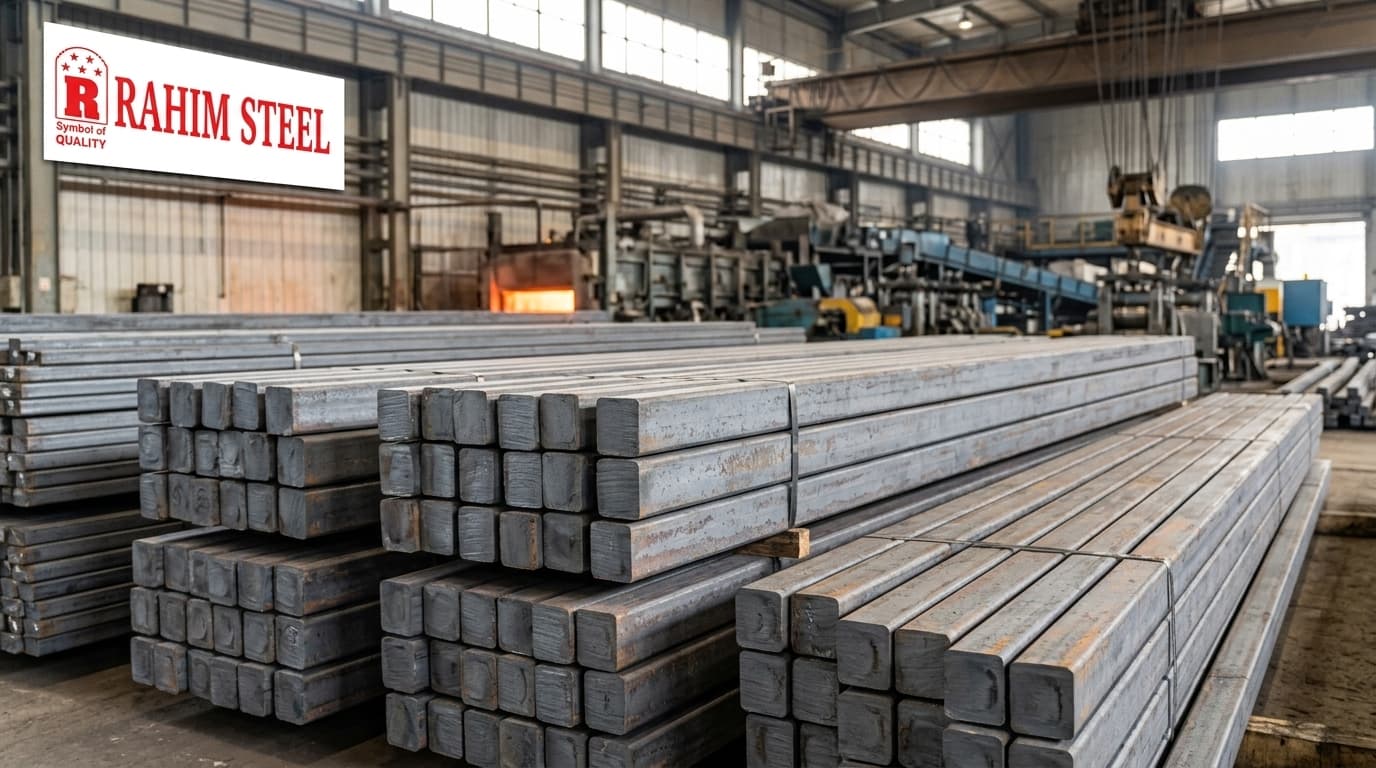
A steel billet is a semi-finished square or rectangular steel bar. It is not the final product used on a construction site. Instead, manufacturers heat and roll them into finished products such as TMT reinforcement bars, rods, angles, channels, and structural sections.
Rahim Steel produces billets by controlled melting, refining, and continuous casting. The company states that its billets have uniform dimensions, clean surfaces, and controlled chemical composition, which helps rolling mills produce consistent finished steel.
The typical chemical range for Rahim Steel billets includes:
- Carbon: 0.25–0.35%
- Manganese: 0.40–1.20%
- Silicon: 0.03–0.50%
- Phosphorus: up to 0.045%
- Sulfur: up to 0.050%
These figures matter because carbon affects strength and hardness, manganese supports strength and wear resistance, and excessive phosphorus or sulfur can cause processing problems. A billet with unstable chemistry can create uneven mechanical properties in the final rebar or structural product.
Rahim Steel says its billet production follows ISO 6935-2:2016 and ISO 9001-certified production practices. It also provides material certificates and conducts chemical analysis, dimensional checks, and mechanical testing for each batch.
How Rahim Steel Makes Its Billets
The production process starts with melting steel in an induction furnace. During this stage, the manufacturer controls alloying elements and tries to keep impurities low. The molten steel then goes through ladle treatment and deoxidation, where the chemical composition is adjusted before casting.
After that, the liquid steel is poured into a continuous casting machine. Rahim Steel’s plant information states that liquid metal is raised to around 1,600–1,650 degrees Celsius for casting. The steel is then cast into billets with standard square or rectangular cross-sections, commonly from 100 mm × 100 mm to 150 mm × 150 mm.
Next, the process moves to cooling, cutting, inspection, and bundling. Billets are usually cut into lengths of 4 to 12 meters. Controlled cooling helps reduce internal stress and supports a finer grain structure. Before shipment, each batch is checked for chemical composition, size, surface condition, and mechanical performance.
This process matters for rolling mills because a billet must behave predictably under heat and pressure. If the billet has internal defects, poor surface quality, or uneven chemistry, the final rebar or section may suffer from weak spots, surface problems, or inconsistent strength.
Common Uses of Rahim Steel Billets
Rahim Steel billets are used across several sectors in Bangladesh. Their main role is as input material for downstream steel production, but the final products reach many industries.
Common applications include:
- TMT bars and reinforcement steel for buildings, bridges, and industrial structures
- Rods, angles, channels, flats, and other rolled sections
- Structural frames, columns, supports, and fabrication work
- Machinery, automotive components, and general engineering products
- Foundation steel and industrial construction projects
Bangladesh’s construction sector depends heavily on reinforcement steel. TMT bars made from quality billets must handle tension, bending, welding, and long-term loads. For infrastructure such as bridges, flyovers, industrial sheds, and high-rise buildings, consistency becomes even more important.
Rahim Steel also produces other steel products, including 40-grade and 60-grade deformed bars, MS angles, MS channels, flat bars, commercial plates, and shipbuilding-grade plates. This wider product range matters because buyers often prefer a supplier that can support different project requirements.
A Short History of Rahim Steel
Rahim Group began in 1958, when Al-Haj Abdur Rahim established National Foundry in Shyampur, Dhaka. The company started with basic iron and cast products and later expanded into re-rolling, steel production, ship recycling, plates, and energy.
Some key milestones include:
- 1958: National Foundry was established in Shyampur, Dhaka.
- 1968: The company commissioned its first re-rolling mill to produce 40-grade deformed bars.
- 1976: Diamond Steel Products Co. Pvt. Ltd. was founded.
- 1983: Rahim Steel Mill was established at Kachpur, Sonargaon.
- 1984: Bangladesh’s first steel plant was established at Kachpur.
- 2003: Mild steel commercial plate production began.
- 2004: Rahim Steel received Germanischer Lloyd approval for GL-A-grade hull structural steel plates.
That history matters to buyers because steel manufacturing depends on experience, process control, and reliable supply chains. A company that has operated through different stages of Bangladesh’s industrial development is generally better positioned to understand local project needs than a newly formed trader with no production background.
What Buyers Should Check Before Ordering
If you are buying Rahim Steel billets or finished steel made from them, do not rely only on price. Ask for documents and confirm that the material matches your project specification.
Before ordering, check:
- Chemical composition report for carbon, manganese, silicon, phosphorus, and sulfur
- Dimensional details, including cross-section size and length
- Surface condition, especially cracks, seams, heavy scale, or visible defects
- Material inspection certificate and batch traceability
- Required standard, such as ISO, ASTM, or project-specific requirements
- Delivery quantity, bundling, loading, and transport arrangements
- Whether the billet grade suits your rolling mill and final product
For rolling mills, ask how the billet will perform while reheating and hot rolling. For construction buyers, ask for test certificates for the finished TMT bars or structural sections. A good supplier should be able to explain the difference between billet specifications and finished-product standards.
Final Thoughts
Rahim Steel Bangladesh is a sensible choice for buyers looking for steel billets and related steel products from an established local manufacturer. Its billets are designed for rolling mills that produce TMT bars, rods, and structural sections, and the company stresses controlled chemistry, continuous casting, testing, and material certification.
For any serious purchase, compare the technical specifications with your project requirements, ask for batch certificates, and confirm delivery terms before confirming the order. Steel is a long-term material decision, and the right billet or finished product can save time, reduce waste, and support safer construction.
Questions & Answers
What is Rahim Steel Bangladesh known for?
Rahim Steel Bangladesh is known for manufacturing steel billets, deformed bars, MS plates, angles, channels, and other steel products. The company has its origins to 1958 and has been involved in Bangladesh’s steel industry for more than six decades.
What are Rahim Steel billets used for?
Rahim Steel billets are used as raw material for TMT bars, rods, structural steel, angles, channels, and engineering products. Rolling mills heat and roll the billets into the required finished shape.
What sizes are Rahim Steel billets available in?
The company’s product information mentions standard square or rectangular billets, typically from 100 mm × 100 mm to 150 mm × 150 mm. Standard lengths are generally 4 to 12 meters, though buyers should verify the precise available size before ordering.
Are Rahim Steel billets suitable for TMT bar production?
Yes. Billets are a primary input for TMT bar manufacturing. Their chemical makeup, internal quality, and dimensional uniformity affect the strength, ductility, and rolling performance of the finished bars.
Does Rahim Steel provide quality certificates?
Rahim Steel states that its products undergo quality testing and come with material certificates. Buyers should still request the certificate for their specific batch and verify that it covers chemical composition, dimensions, and mechanical properties.
Is Rahim Steel certified?
Rahim Steel states that it is ISO 9001 certified and that its billets follow ISO 6935-2:2016. The company also mentions BUET certification for its manufacturing processes and products.
How can I request a quote from Rahim Steel?
You can request a quote or contact the sales team through the company’s contact page at rahimsteel.com.bd/contact-us. When contacting them, include the product type, required size, grade, quantity, delivery location, and anticipated delivery date.
Need Steel Experts?
We have our own team of civil and architectural professionals ready to assist you. Just share your requirements with our experts — we’ll be happy to serve you with the right solutions, exactly as you need.
Contact Our Experts