
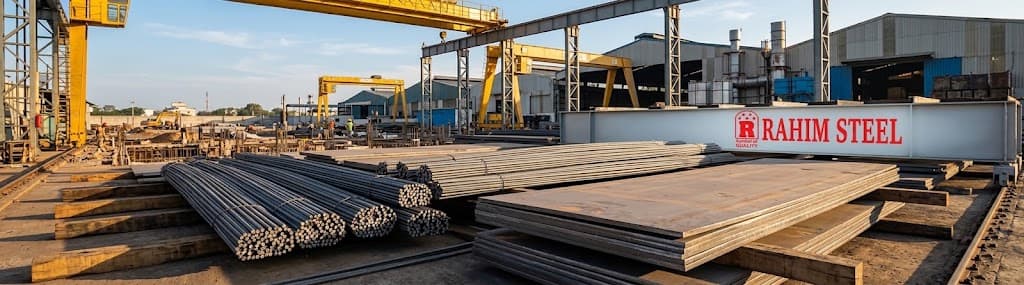
Rahim Steel Rolling Price in Bangladesh: Construction & Buying Guide
Rahim Steel Rolling Price in Bangladesh: A Practical Guide for Construction
In Bangladesh’s dynamic construction landscape, the strength, safety, and longevity of any building depend directly on the quality of steel specified in structural engineering plans. From subterranean foundation footings to load-bearing columns, perimeter beams, and suspended slabs, structural steel remains the backbone of modern civil construction.
Among domestic steelmakers, Rahim Steel Mills holds a distinguished position with more than six decades of industrial contribution. Starting its journey in 1958 as National Foundry, the company has expanded across steel melting, heavy re-rolling, MS plate manufacturing, and raw-material processing.
When preparing construction budgets, developers and builders frequently inquire about the rolling price in Bangladesh. However, steel prices are influenced by product type, gauge/dimension, engineering specification, order volume, and prevailing market dynamics. Therefore, obtaining verified commercial quotations while evaluating technical compliance is essential before making a purchase.
Rahim Steel Products and Their Role in Modern Construction
The history of Rahim Steel features critical milestones in Bangladesh's industrial evolution:
1968 (First Re-Rolling Mill): Rahim Steel commissioned Bangladesh’s first re-rolling mill, pioneering the production of 40-grade deformed reinforcement bars and shaping the nation's commercial construction standard.
1983 (Integrated Supply Ecosystem): Rahim Steel Mills Co. (Pvt) Ltd. was established, introducing professional shipbreaking and secondary steel production.
1984 (First Integrated Steel Plant): According to company milestones, Rahim Steel established Bangladesh's first dedicated steel plant, driving domestic self-reliance in steelmaking billets and raw materials.
Today, Rahim Steel provides engineered steel solutions across national infrastructure developments, commercial high-rises, and industrial fabrication projects.
Why Steel Quality in Building Foundations Is Non-Negotiable
The foundation is the most critical element of any building; it transfers dead, live, and seismic loads directly into the supporting soil strata. Within reinforced concrete foundations, structural steel carries high tensile, shear, and bending stresses.
When procuring foundation steel, looking at price alone introduces severe structural risk. Critical factors to verify include:
Structural Engineer’s Specifications: Adherence to design drawings and load calculations.
Steel Grade & Diameter: Yield strength, ductility, and elongation tolerances.
Batch Quantity: Volume required to complete continuous casting phases without cold joints.
Quality Documentation: Verified Mill Test Certificates (MTC).
Supplier Reliability & Production History: Established track record of metallurgical consistency.
Why Consider Rahim Steel Products?
From a small-scale foundry in 1958, Rahim Steel has developed into an industrial conglomerate spanning over 100 acres of manufacturing facilities and employing more than 6,000 professionals.
The company operates dedicated MS plate production lines alongside raw-material manufacturing facilities, backed by decades of metallurgy and rolling expertise.
Before placing an order for any construction project, engineering teams must cross-check the material's technical specifications against the project's structural requirements.
Leadership Vision & Social Impact
Rahim Steel’s industrial legacy is anchored in its founder's vision for national self-reliance:
“In 1983, Founder Chairman Mr. Abdur Rahim officially initiated Bangladesh’s first professional ship-breaking operation. As a pioneer, his mission was to ensure a sustainable, domestic supply of raw materials for the country’s growing steel industry.”
Beyond steel production, the company's stated mission encompasses creating sustainable employment, training certified technical professionals, upholding rigorous workplace safety standards, and contributing to national infrastructure development.
Understanding Rolling Prices in Bangladesh & Procurement Steps
The phrase "rolling price in Bangladesh" refers to the market rate of re-rolled structural steel bars, plates, and sections. This figure is not fixed; it fluctuates based on several commercial and metallurgical variables.
Key Factors Determining Rolling Prices:
Global Raw Material Rates: International scrap, iron ore, and prime billet prices directly influence domestic rolling costs.
Steel Grade & Processing: Standard commercial grades vs. high-yield seismic-resistant grades require different processing standards.
Product Dimensions & Gauge: Lighter or customized gauge sections involve different rolling tolerances compared to standard heavy sections.
Order Volume: Bulk commercial purchases benefit from scale economies compared to small-lot retail purchases.
Logistics & Transportation: Site delivery distances and unloading requirements affect total landed costs.
Procurement Rule:
Avoid relying on unverified internet rate listings. The safest procurement strategy is to provide your Bill of Quantities (BOQ) with specific bar sizes and tonnages directly to an authorized Rahim Steel sales desk to receive a current, binding commercial quotation.
Recommended 5-Step Procurement Process:
Step 1 — Finalize Engineering Drawings: Confirm total tonnage, bar diameters, and plate thicknesses specified by your structural engineer.
Step 2 — Prepare Bill of Quantities (BOQ): Group your steel order by construction phase (foundation, columns, floor casting).
Step 3 — Request a Direct Quotation: Contact authorized Rahim Steel sales channels with your BOQ to receive current rolling rates and delivery schedules.
Step 4 — Review Mill Test Certificates (MTC): Verify that the batch complies with yield stress, tensile ratio, and bend test requirements.
Step 5 — Finalize Logistics & Delivery: Confirm delivery schedules to site to avoid storage degradation and weather exposure.
Conclusion
Constructing an enduring, safe building requires rigorous engineering decisions and verified materials at every stage from deep foundation footings to the final roof slab.
With more than 65 years of industry experience, pioneering achievements including the nation's first re-rolling mill in 1968, and a production presence spanning over 100 acres, Rahim Steel remains a reliable manufacturing partner for Bangladesh’s construction sector.
When budgeting for your next project, look beyond general market rolling rates. Confirm your engineering specifications, assess required quantities, and request a transparent commercial quotation directly from Rahim Steel to ensure your structure is built on a foundation of certified strength.
Frequently Asked Questions (FAQ)
Q1: What is the background of Rahim Steel Mills?
A: Rahim Steel Mills is an established steel manufacturer in Bangladesh, founded in 1958 as National Foundry and credited with launching the country’s first re-rolling mill in 1968.
Q2: Can Rahim Steel products be used across all building stages?
A: Yes. In accordance with structural engineering specifications, Rahim Steel manufactures products suitable for foundation footings, structural columns, beams, slabs, and heavy industrial framing.
Q3: How can I find the current Rahim Steel rolling price in Bangladesh?
A: Because steel rates vary with scrap prices and market dynamics, the most accurate method is to submit your required product type, size, and batch tonnage directly to an authorized Rahim Steel dealer or sales office for an official quotation.
Q4: Why is steel selection so critical in foundation work?
A: The foundation bears the entire dead, live, and seismic load of the structure. Using non-compliant or substandard re-rolled steel in foundations can lead to differential settlement, concrete cracking, and structural failure.
Q5: What causes rolling prices to fluctuate in Bangladesh?
A: Prices vary based on global scrap metal rates, energy costs, transportation fees, foreign exchange rates, order volume, and local supply-demand conditions.
Need Steel Experts?
We have our own team of civil and architectural professionals ready to assist you. Just share your requirements with our experts — we’ll be happy to serve you with the right solutions, exactly as you need.
Contact Our Experts