
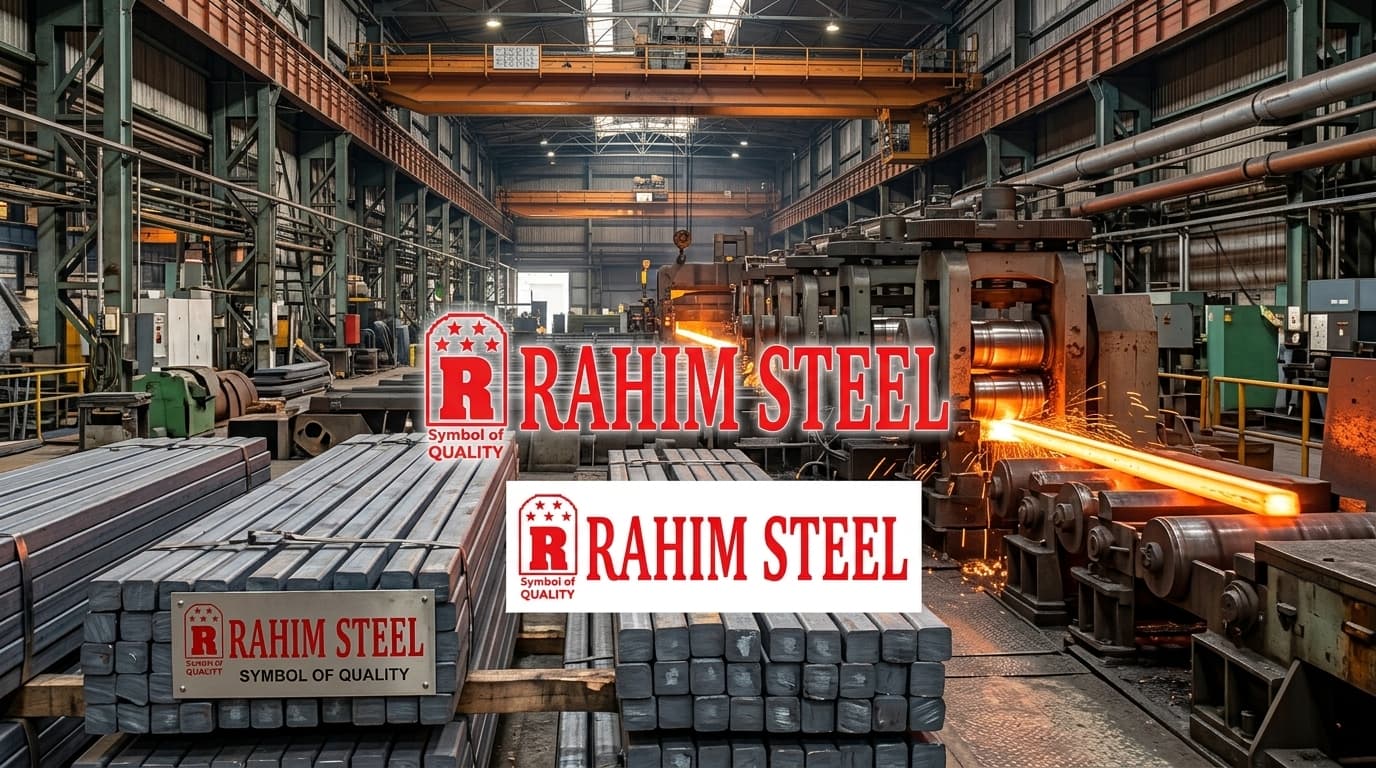
Rolling Mill Manufacturers in Bangladesh: Billets & Steel Quality
Rolling Mill Manufacturers in Bangladesh: What Buyers Should Know Before Choosing a Supplier
Rolling mill manufacturers in Bangladesh supply the billets, rebar, structural sections, and plates used in construction, fabrication, and engineering projects. The right supplier matters because a rolling mill can only produce consistent steel when its input material has stable chemistry, clean surfaces, and uniform dimensions. Rahim Steel is one of the country’s established steel producers, with a history dating back to 1958 and a product range that includes steel billets, deformed bars, and MS plates.
This guide explains how rolling mills work, why billet quality affects finished steel, & what buyers should check before ordering. It also answers common questions about Rahim Steel Billets and their use in rebar and structural steel production.
Why Steel Billets Decide Rolling Mill Output
A rolling mill takes heated steel and passes it through a series of rolls to reduce its thickness or change its shape. The process can produce TMT bars, rods, angles, channels, flats, and structural sections. But the mill does not create quality on its own. It depends heavily on the billet entering the furnace.
Rahim Steel Billets are made for rolling mills and rebar production. They are produced under controlled conditions to maintain consistent chemical composition and uniform size. The company describes them as the primary raw material for TMT bars, structural steel, and engineering applications.
A good billet should have:
- A controlled carbon, manganese, silicon, phosphorus, and sulfur content
- Uniform cross-section and length
- A clean surface with limited defects
- Low internal stress after cooling
- Consistent mechanical properties from batch to batch
These points matter because billet variation can create downstream problems. If the carbon content changes too much, the finished bar may not meet strength requirements. If the billet has surface cracks or internal defects, those problems can carry into the rolled product. If dimensions vary, rolling becomes less efficient and wastage increases.
Rahim Steel produces billets through melting, refining, ladle treatment, continuous casting, controlled cooling, cutting, and inspection. The stated typical chemical range includes carbon at 0.25–0.35%, manganese at 0.40–1.20%, silicon at 0.03–0.50%, phosphorus at 0.045% maximum, and sulfur at 0.050% maximum. Billets are commonly produced in square or rectangular sections from 100 mm × 100 mm to 150 mm × 150 mm, then cut into lengths of 4–12 meters.
Rolling Mill Manufacturers in Bangladesh: Quality Standards and Product Use
When comparing rolling mill manufacturers in Bangladesh, buyers should look beyond price. A supplier should be able to explain its production process, provide test certificates, and show that its material meets the required standard for the intended application.
Rahim Steel states that its production is ISO 9001 certified and that its billets follow ISO 6935-2:2016. The company also says its products undergo chemical analysis, dimensional checks, and mechanical testing, and that material certificates are available. Rahim Group also manufactures B420DWR and B500DWR deformed bars under BDS ISO 6935-2:2016, using hot-rolled billets treated through a controlled thermo-mechanical process.
Main applications
Rahim Steel Billets are used as input material for:
- TMT bars and reinforcement steel
- Structural steel production in rolling mills
- Angles, channels, rods, and sections
- Automotive, machinery, and engineering components
- Foundation steel for construction and industrial projects
For a re-rolling mill, billet quality directly affects productivity. Uniform billets heat more evenly, pass through the rolls more predictably, and help reduce rejection rates. For a construction company, that means more dependable rebar and structural material.
What buyers should ask for
Before ordering, ask the supplier for:
- The applicable standard, such as ISO 6935-2:2016
- A recent chemical composition report
- Dimensional specifications, including section size and length
- Mechanical test results
- Details of quality inspection and certification
- Delivery capacity and packaging arrangements
- Information about after-sales support and technical assistance
A supplier that can answer these questions clearly is easier to work with over the long term. Rahim Steel provides request-quote and sales-contact options through its website for buyers who need product specifications or commercial details.
Rahim Steel’s Experience in Bangladesh’s Steel Industry
Rahim Steel’s background matters because steel manufacturing requires deep technical expertise. The company’s history began in 1958, when founder Al-Haj Abdur Rahim established the National Foundry in Shyampur, Dhaka. In 1968, the group commissioned its first re-rolling mill to manufacture 40-grade deformed bars. A second mill, Diamond Steel Products Co. Pvt. Ltd., followed in 1976.
In 1983, Rahim Steel Mills Co. (Pvt.) Ltd. was established at Kachpur, Sonargaon. The company later expanded into steel production, shipbreaking, energy, and plate manufacturing. Rahim Steel says it began producing mild steel commercial plates in 2003 and received Germanischer Lloyd GL-A certification for shipbuilding-grade plates in 2004.
Today, Rahim Steel produces billets, deformed bars, hot-rolled plates, and shaft round bars. Its product range targets construction, infrastructure, fabrication, and industrial engineering buyers.
Product overview: Rahim Steel Billets
| Item | Details |
| Product | Rahim Steel Billets |
| Main use | Raw material for TMT bars, rods, and structural steel |
| Standard | ISO 6935-2:2016; ISO 9001 certified production |
| Grade | Mild / medium carbon steel |
| Typical carbon content | 0.25–0.35% |
| Typical manganese content | 0.40–1.20% |
| Typical silicon content | 0.03–0.50% |
| Phosphorus | 0.045% maximum |
| Sulfur | 0.050% maximum |
| Common billet sections | 100 mm × 100 mm to 150 mm × 150 mm |
| Common lengths | 4–12 meters |
| Quality documents | Chemical analysis, dimensional verification, mechanical testing, material certificates |
These specifications serve a practical purpose: predictable rolling performance and consistent finished products. Controlled chemistry helps the mill achieve the required strength and ductility. Uniform dimensions help reduce handling and rolling problems. Clean surfaces and low internal defects help protect the quality of the final bar or section.
Final Advice for Buyers
Choose a supplier based on documented quality, not only on the lowest quoted price. For rolling mills, the billet is the starting point of the entire production chain. For construction companies, the finished rebar or structural section must perform reliably in the field.
Rahim Steel offers a clear combination of local manufacturing experience, billet production, finished steel products, and quality documentation. Its stated use of ISO 9001-certified production, ISO 6935-2:2016 compliance, and batch testing gives buyers a practical basis for evaluating the material.
If you operate a rolling mill, fabricate structural steel, or purchase rebar for construction projects, ask for current specifications, test certificates, and delivery terms before finalizing your order. Then compare those documents with your project requirements. A supplier that can provide this information consistently is more likely to support stable production and dependable finished steel.
Questions and Answers
Q: What do rolling mill manufacturers in Bangladesh produce?
A: They produce rolled steel products such as TMT bars, deformed bars, rods, angles, channels, flats, plates, and structural sections. Many mills also need billets as their main input material. Rahim Steel supplies billets for rebar production and rolling mills, along with finished steel products such as deformed bars and MS plates.
Q: Why are steel billets important for TMT bar production?
A: TMT bars are rolled from billets. If the billet has inconsistent chemistry or internal defects, the finished bar may have variable strength or quality problems. Rahim Steel Billets are made with controlled chemical composition and uniform size to support efficient rolling and consistent mechanical properties.
Q: What standards apply to Rahim Steel Billets?
A: Rahim Steel states that its billets are produced under ISO 9001-certified production and follow ISO 6935-2:2016. Buyers should still request the material certificate and test reports for the specific batch they purchase.
Q: What chemical composition should buyers check?
A: Carbon, manganese, silicon, phosphorus, and sulfur are key checks. For Rahim Steel Billets, typical carbon is 0.25–0.35%, manganese is 0.40–1.20%, silicon is 0.03–0.50%, phosphorus is up to 0.045%, and sulfur is up to 0.050%. These values affect the steel's strength, ductility, weldability, and cleanliness.
Q: What sizes are available?
A: Rahim Steel Billets are commonly produced in square or rectangular cross-sections from 100 mm × 100 mm to 150 mm × 150 mm. Standard lengths are typically 4–12 meters. Buyers should confirm the exact size and length required for their rolling mill before ordering.
Q: Can these billets be used for structural steel?
A: Yes. Rahim Steel identifies its billets as raw material for TMT bars, reinforcement steel, structural steel production, angles, channels, rods, and sections. They can also be used in engineering and industrial applications that require controlled steel input.
Q: How does Rahim Steel control quality?
A: The company describes a process that includes melting and refining, ladle treatment and deoxidation, continuous casting, controlled cooling, cutting and finishing, and batch-level inspection. Quality control includes chemical analysis, dimensional verification, and mechanical testing.
Q: How long has Rahim Steel operated in Bangladesh?
A: Rahim Group’s steel history began in 1958 with National Foundry in Shyampur, Dhaka. Its first re-rolling mill started in 1968, and Rahim Steel Mills was established in Kachpur, Sonargaon, in 1983.
Q: How can a buyer get a quotation?
A: Buyers can request a quote or contact the sales team through Rahim Steel’s contact page: Request Quote or Contact Sales.
Need Steel Experts?
We have our own team of civil and architectural professionals ready to assist you. Just share your requirements with our experts — we’ll be happy to serve you with the right solutions, exactly as you need.
Contact Our Experts