
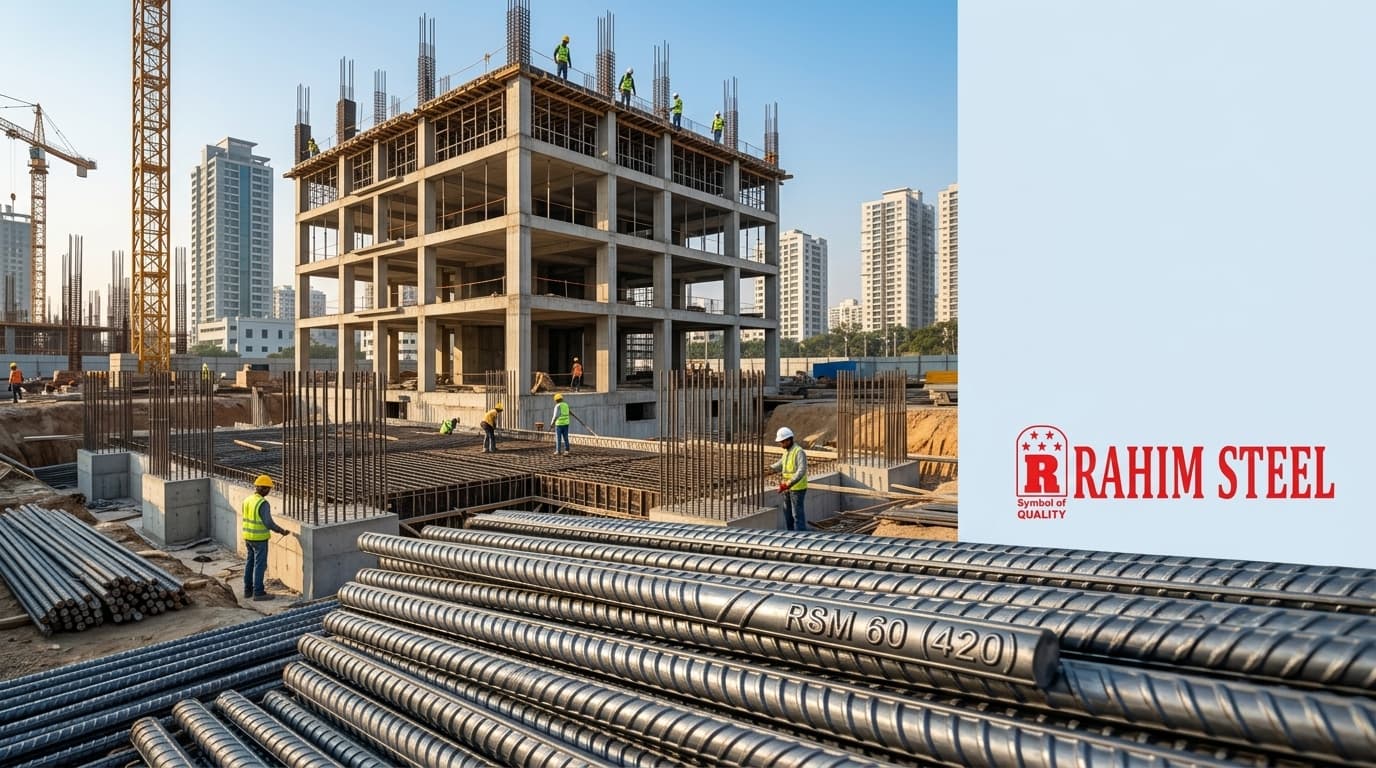
RSM 60 (420): High-Strength Rebar for RCC & Foundations
RSM 60 (420): High-Strength Rebar for RCC & Foundation Work
A strong and durable building starts with a properly designed foundation. Along with quality concrete and good construction practices, the right reinforcement steel is essential for foundations, columns, beams, slabs, and other RCC structures.
RSM 60 (420) is a Grade 60 reinforcing bar manufactured by Rahim Steel Mills in Bangladesh. According to the provided product specifications, it has a minimum yield strength of ≥420 MPa, a TS/YS ratio of ≥1.25, and a minimum elongation of ≥12%. These properties make it appropriate for residential, commercial, and heavy infrastructure applications that require strength and ductility.
What Is RSM 60 (420) and Where Is It Used?
The Grade 60 designation refers to a reinforcing bar with a minimum yield strength of 60,000 psi, equivalent to approximately 420 MPa. RSM 60 (420) is designed to balance strength, ductility, and concrete bonding.
According to the product information, the bar is produced by controlled rolling followed by natural cooling and self-tempering. Its uniform rib pattern provides a strong mechanical bond with concrete.
Key Specifications
- Steel Grade: Grade 60 / Fe 420
- Minimum Yield Strength: ≥420 MPa
- TS/YS Ratio: ≥1.25
- Minimum Elongation: ≥12%
- Building and Foundation Applications
The product can be used in various RCC and structural applications, including:
- Building foundations
- RCC beams
- Columns
- Slabs
- High-rise and multistory buildings
- Bridges and flyovers
- Piling and retaining walls
- Industrial floors
- Precast concrete elements
- Heavy civil works
- Seismic-zone applications where ductility and energy absorption are important
For foundation construction, the required bar diameter, spacing, grade, and quantity should always be determined according to the structural design and a qualified engineer's specifications.
How Is It Manufactured?
The manufacturing process includes several controlled stages:
Heating:
Steel billets are reheated to the required rolling temperature in a reheating furnace.
Hot Rolling:
The heated billets pass through the rolling mill to achieve the required bar diameter.
Natural Cooling:
The outer surface begins cooling after leaving the rolling process.
Self-Tempering:
Heat from the core moves toward the outer layer, helping create a combination of strength and toughness.
Sizing and Ribbing:
The final rolling process creates the required dimensions and rib pattern for mechanical bonding with concrete.
Straightening and Cutting:
The bars are straightened and cut to the required length.
Quality Testing:
The bars are labelled and packed after mechanical, chemical, dimensional, and physical tests.
Why Consider RSM 60 (420) for Construction?
Choosing reinforcement steel is an important decision in any RCC project. The right product ought to match the structural design, required strength, ductility, construction method, and applicable standards.
Key Product Benefits
High Yield Strength
With a minimum yield strength of ≥420 MPa, the bar is designed for structural reinforcement applications that demand high strength.
Good Ductility
The minimum elongation of ≥12% provides deformation capacity, an important consideration for structural applications that require ductility.
Strong Concrete Bond
The ribbed surface improves mechanical bonding between the reinforcement and concrete.
Suitable for Heavy Construction
Its listed applications include bridges, flyovers, piling, retaining walls, industrial floors, and other heavy civil works.
Controlled Manufacturing Process
Controlled rolling, cooling, sizing, and ribbing help produce consistent dimensions and mechanical properties.
Quality Assurance
According to the provided product information, Rahim Steel products undergo quality testing and are supplied with material certificates.
Statement from Rahim Steel
According to Rahim Steel's published company history, Founder Chairman Mr. Abdur Rahim officially started Bangladesh's first professional ship-breaking operation in 1983. The company states that his aim was to establish a sustainable supply of raw materials for the country's steel industry.
Rahim Steel's history began in 1958, when National Foundry was established in Shyampur, Dhaka. The company later expanded into re-rolling, steel manufacturing, shipbreaking, and other industrial activities.
According to the company's published background, Rahim Steel now supplies steel products and essential steel-making raw materials for infrastructure, industrial, and commercial projects. The company also highlights quality, durability, reliability, employment, and community development.
When Is RSM 60 (420) Appropriate?
On the basis of the provided product information, it can be considered for:
- Residential buildings
- Commercial buildings
- Multistory construction
- Foundations and base structures
- Bridges and flyovers
- Piling and retaining walls
- Industrial construction
- Precast concrete elements
- Heavy civil projects
The final selection should always follow the structural engineer's design, project specifications, and applicable building standards.
How to Choose RSM 60 (420) for Foundation Work?
Before purchasing reinforcement steel for a building, first review the structural drawing and reinforcement schedule. These documents should identify the required steel grade, bar diameter, spacing, quantity, and other technical specifications.
For foundation work, the engineer determines the reinforcement requirements based on the structural design and project conditions. The selected reinforcement should then match those requirements.
Simple Steps to Purchase the Product
1. Check the Structural Design
Confirm the required steel grade and bar diameter from the engineer's drawings.
2. Determine the Quantity
Calculate the required quantity based on the reinforcement schedule and construction plan.
3. Confirm Product Specifications
Check the grade, dimensions, mechanical properties, and required standards before ordering.
4. Request the Material Certificate
Ask for the relevant material certificate and quality documentation.
5. Contact Sales for a Quotation
Check current availability, delivery information, and pricing through the appropriate Rahim Steel sales channel.
Conclusion
Reinforcing steel plays an important role in the performance of a building's foundation and overall RCC structure. With a minimum yield strength of ≥420 MPa, minimum elongation of ≥12%, and a ribbed surface for mechanical bonding, RSM 60 (420) is designed for a variety of structural and civil engineering applications.
For foundation construction, however, choose reinforcement based on more than strength alone. Consider the structural design, soil conditions, required bar diameter, spacing, applicable building codes, and project specifications.
Before purchasing, confirm the required specifications with a qualified structural engineer, check the material certificate, and obtain an updated quotation from the appropriate sales channel. Proper structural design, combined with correctly specified reinforcement, is indispensable for safe, durable construction.
Frequently Asked Questions
Q1. What is RSM 60 (420)?
It is a Grade 60 reinforcing bar from Rahim Steel with a specified minimum yield strength of ≥420 MPa, according to the provided product information.
Q2. Where can it be used?
It can be used in RCC beams, columns, slabs, foundations, multi-storey buildings, bridges, piling, retaining walls, and other structural and civil construction applications.
Q3. Is it suitable for foundation work?
Yes, it can be considered for foundation reinforcement when the structural design specifies the appropriate grade and diameter.
Q4. What is its minimum yield strength?
The provided specification states a minimum yield strength of ≥420 MPa.
Q5. What is the minimum elongation?
The provided product specification states a minimum elongation of ≥12%.
Q6. What should I check before buying?
Check the required grade, diameter, quantity, material certificate, product specifications, and current quotation. Always follow the structural engineer's requirements.
Need Steel Experts?
We have our own team of civil and architectural professionals ready to assist you. Just share your requirements with our experts — we’ll be happy to serve you with the right solutions, exactly as you need.
Contact Our Experts