
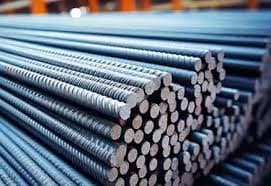
RSM ROBUST B500CWR
Key Specifications
- Yield Strength (ReH): ≥ 500 MPa
- TS / YS Ratio: ≥ 1.15
- Elongation (minimum): ≥ 7.5%
- C (max): 0.24%
Quality Assurance
All our products undergo rigorous quality testing and come with material certificates.
Product Overview
The first "B" stands for steel for Concrete reinforcement steel. The next 3 digits represent the specified characteristics value of the minimum upper yield strength. The fifth symbol stands for ductility class. The sixth symbol "W" means weldable quality, ensuring structural continuity and ease of fabrication. The last "R" stands for Ribbed surface for superior mechanical bonding with concrete.
Salient Features of Ductility Class "C":
• According to BDS ISO 6935-2:2016, the high ductility class is "C" providing the highest level of energy absorption. The Elongation at Maximum Force (EMF) is 7.5% in this class, which is very much effective in earthquake-prone zone.
• The ratio of tensile strength and yield strength (TS/YS) is a minimum of 1.15, which is one of the major requirements of the American Concrete Institute (ACI) and Bangladesh National Building Code (BNBC), especially in earthquake-prone zones.
• Due to its maximum yield strength range, the structural designers will have great flexibility in the yield point (fy) design.
• The major provisions of the Ductility class "C" are complying with Low Alloy Steel Standard: BS 4449 Grade 500C, which is widely accepted by the structural engineers.
TMT Process
RAHIM STEEL is using the world's prominent latest STS technology to develop Thermo Mechanically Treated (TMT) rebars. The deformed bars are produced in state-of-the-art plants under the close supervision of high-caliber metallurgists and engineers. RSM ROBUST B500CWR rebars are hot rolled from steel billets and subjected to PLC controlled on line thermo mechanical treatment in three successive stages.
The core "Thermo Mechanical" part of the manufacturing occurs immediately after the steel bar leaves the final rolling stand at a high temperature of approximately 950°C to 1050°C
1. Quenching: The red-hot bar enters a quenching box where it is subjected to high-pressure water sprays. This rapid cooling turns the outer surface into a hard, strong structure called Martensite, while the inner core remains hot and in an Austenitic state.
2. Self-Tempering: As the bar leaves the quenching box, heat from the still-hot inner core flows outward to the surface. This heat "Tempers" the hard outer layer, transforming it into Tempered Martensite, which is both strong and tough (not brittle).
3. Atmospheric Cooling: The bars are placed on a cooling bed to cool naturally to room temperature. During this slow final cooling, the soft inner core transforms into a Ferrite-Pearlite structure, which provides the RSM rebars a unique combination with its high ductility and flexibility.
Customers:
Due to its higher uniform elongation and excellent bend ability, it could be used in all type of RCC structures as well as earthquake-prone zones. It is now widely used in various government projects of PWD, LGED, RHD, DPHE, EED, RAJUK, WASA, City Corporation, MES etc.
Application of RSM ROBUST B500CWR Rebar:
Suitable for almost all RCC works. Like as
• Residential & Commercial Buildings • Standard Infrastructure
• Bridge Projects • Foundations
• Earthquake-resistant structures • Structural Frames
Advantages of ROBUST B500CWR:
The B500CWR steel grade is the gold standard for construction in Bangladesh because it perfectly balances strength and safety. Here are its primary advantages:
High Load-Bearing Capacity: With a yield strength of 500 MPa, it can carry significantly more weight than traditional 40-grade or 60-grade bars, allowing for leaner, more efficient structural designs.
Seismic Safety (Ductility): The "C" class signifies High Ductility. It has a high T/Y ratio (≥1.15), meaning it can stretch and absorb energy during an earthquake rather than snapping suddenly, preventing total building collapse.
Cost Efficiency: Because the bars are stronger, you need less steel (by weight) to support the same load. This reduces the overall cost of reinforcement in a project.
Easy to Weld: The "W" stands for Weldable. It has a low carbon equivalent, which means it can be welded on-site without losing its structural integrity or becoming brittle at the joints.
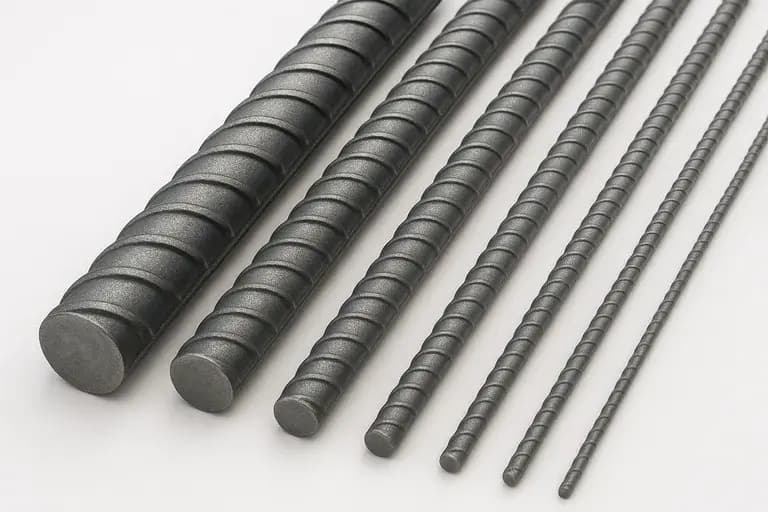
Superior Concrete Grip: The "R" stands for Ribbed. The precise rib pattern ensures a tight mechanical bond with the concrete, preventing any slippage under heavy stress.
Better Bendability: Despite its high strength, the TMT process gives it a soft core that allows it to be bent into various shapes (like stirrups) without developing internal cracks.
Corrosion Resistance: Most modern B500CWR bars in Bangladesh are treated to resist the humid and salty air of our coastal and riverine environment, increasing the lifespan of the building.
When RSM ROBUST B500 CWR is Appropriate:
- Residential Housing: It is the standard choice for constructing typical 5 to 10-story residential apartments and private homes in Bangladesh.
- Commercial Buildings: It provides the necessary strength for shopping malls and office complexes that require large open floor spaces.
- Standard Seismic Zones: It is highly appropriate for cities like Dhaka and Chittagong that fall under moderate seismic risk categories.
- Infrastructure Projects: It is widely used in the construction of bridges, culverts, and highway flyovers due to its durability.
- Weldable Structures: It is ideal for projects requiring on-site welding or mechanical splicing without compromising structural integrity.
- Foundation Work: Its high grip and strength make it suitable for deep pile foundations and heavy-duty base slabs.
- Cost-Conscious Projects: It is the go-to option when you need high-performance steel that balances safety with budget efficiency.
Technical Specifications
| Property | Value |
|---|---|
| Yield Strength (ReH) | ≥ 500 MPa |
| TS / YS Ratio | ≥ 1.15 |
| Elongation (minimum) | ≥ 7.5% |
| C (max) | 0.24% |
| Mn (max) | 0.90% |
| Si (max) | 0.30% |
| S (max) | 0.045% |
| P (max) | 0.045% |
| Carbon Equivalent (CEV max) | 0.55 |
| Standard | BDS ISO 6935-2:2016 |
| Ductility Class | C |
| Intended for Welding | Yes (“W”) |
| Ribbed Bar | Yes (“R”) |
Key Features
The “B” in ROBUST B500CWR denotes steel for reinforcing concrete; “500” indicates a minimum yield strength of 500 MPa.
The “C” stands for the highest ductility class (“C”) under the standard BDS ISO 6935 2:2016 — meaning the bar is designed with higher elongation/ductility. “W” indicates the grade is suitable for welding.
“R” signifies it is a ribbed bar — the ribs enhance bonding with concrete.
Manufactured with a thermo-mechanical treatment (TMT) process.
Because of the above process and the high ductility class, this bar is particularly suited for use in earthquake-prone zones and in reinforced concrete (RCC) structures where bending, re-bending and ductility matter.
The high strength and ribbed geometry allow for better bonding to concrete (reducing slip) and improved performance under structural loads.
The weldability (“W”) means that fabricators can perform welding where required (rather than only mechanical splicing), which increases flexibility in construction.
Common diameters available in the market: 8mm, 10mm, 12mm, 16mm, 20mm, 22mm, 25mm, 28mm, 32mm. Standard length 12 meters with Customers cut to length service or special length.
Product Brochure
Download our detailed product brochure for complete technical information.
Download Brochure (PDF)Looking for today's price of RSM ROBUST B500CWR?
See today's rod price in BangladeshRelated Products
View All ProductsNeed Steel Experts?
We have our own team of civil and architectural professionals ready to assist you. Just share your requirements with our experts — we’ll be happy to serve you with the right solutions, exactly as you need.
Contact Our Experts