
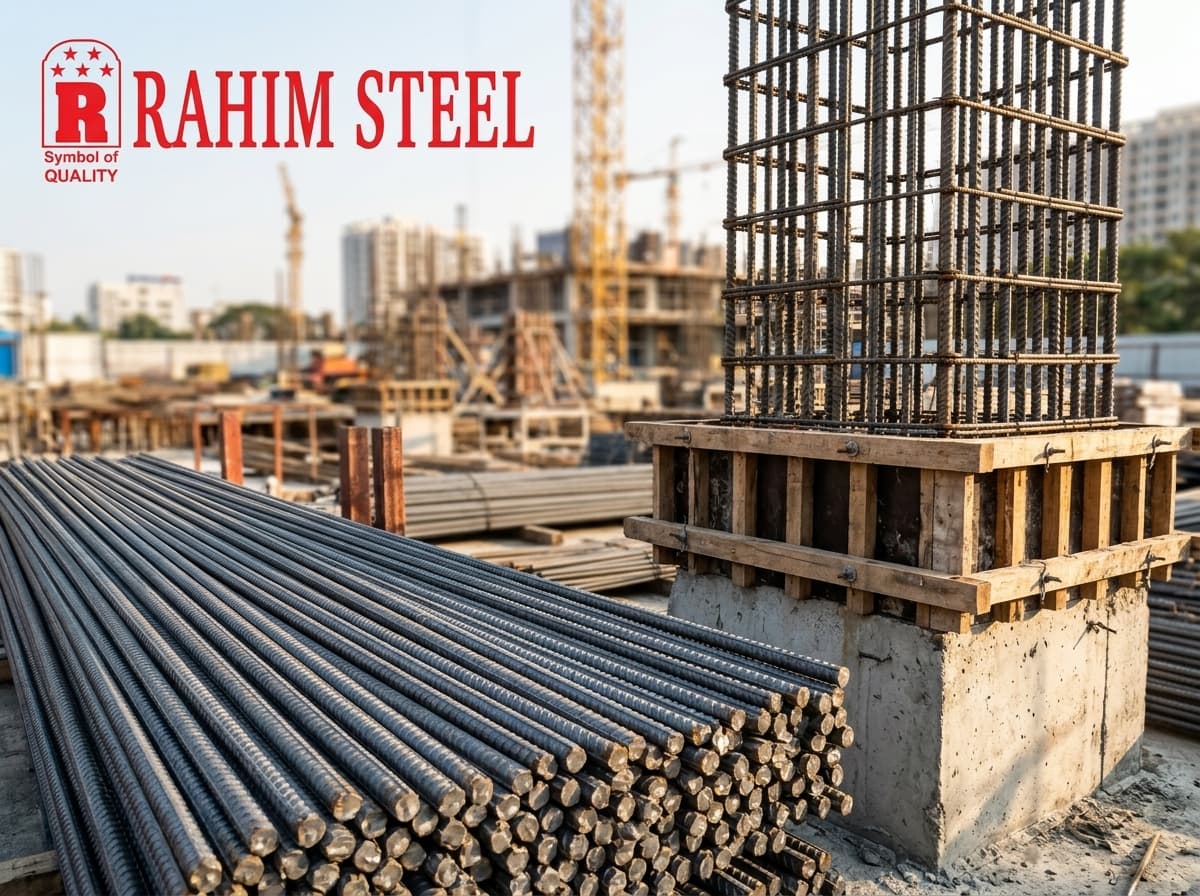
Deformed Bar Meaning
Deformed Bar Meaning: What It Is and Why It Matters in Construction
A deformed bar is a steel reinforcement bar with ribs, lugs, or elevated patterns on its surface. These indentations help the bar grip concrete firmly, so the two materials work together when a structure holds weight. In simple terms, deformed bars are the steel bars used inside reinforced concrete columns, beams, slabs, footings, and walls.
Unlike plain round bars, deformed bars don't rely only on surface friction to stay in place. Their ribs create a mechanical bond with concrete. This bond helps transfer load from the concrete to the steel, reducing the chance of slipping or separation under stress. That is why deformed bars are widely used in buildings, bridges, roads, industrial structures, and earthquake-resistant construction.
Deformed Bar Meaning in Construction
The meaning of a deformed bar is clear: it is a reinforcing steel bar with a shaped surface designed to improve bonding with concrete. The surface pattern may include transverse ribs, longitudinal ribs, or both. These patterns are not decorative; they increase the contact area and mechanical interlock between steel and concrete.
Concrete is strong in compression but weak in tension. Steel, on the other hand, handles tension well. When concrete and deformed steel bars are combined, the concrete resists compression while the steel resists tension. This combination forms reinforced cement concrete, or RCC.
A deformed bar is usually made from steel billets. The billet is heated, rolled, and shaped into a ribbed bar. The final bar may then receive thermo-mechanical treatment to improve strength and ductility. The size, grade, yield strength, elongation, and rib pattern all affect how the bar performs in a structure.
For example, RSM B420DWR is a deformed bar grade used for reinforced concrete. In this marking, “B” means steel for reinforcing concrete, “420” refers to the minimum yield strength in MPa, “D” indicates ductility class, “W” means the bar is suitable for welding, and “R” means ribbed bar. These bars are designed for structural work where strength, ductility, and reliable bonding matter.
Why Deformed Bars Are Used
Deformed bars make reinforced concrete safer and more dependable. Their main value comes from the bond between steel and concrete. When a beam bends, or a column carries a load, the steel must remain firmly anchored inside the concrete. Ribs prevent the bar from pulling out or sliding under tension.
Deformed bars also help control cracking. Small cracks can appear in concrete because of shrinkage, temperature changes, or loading. Properly placed reinforcement holds the concrete together and limits crack width. This does not mean concrete will never crack, but it means the structure can carry loads better and remain serviceable.
Another reason for using deformed bars is ductility. A ductile bar can bend and stretch before it fails. This matters in earthquake-prone areas because structures must absorb movement without sudden failure. Bars with higher elongation and a suitable tensile-to-yield strength ratio give engineers more confidence in the design.
Deformed bars are also practical for construction. They come in different diameters, can be cut and bent to match drawings, and can be tied into cages for columns, beams, and footings. Their ribbed surface gives workers a clear visual difference from plain bars, helping reduce placement mistakes.
Main Types and Grades
Deformed bars are commonly classified by yield strength, ductility class, and functional use. In Bangladesh, deformed bars are commonly used according to BDS ISO 6935-2:2016. The grade number usually indicates the steel's minimum yield strength.
| Bar type | Main purpose | Typical use |
| Plain round bar | Basic reinforcement where bonding demand is lower | Small works, stirrups, ties, and non-structural uses |
| Deformed bar | Strong bonding with concrete | Beams, columns, slabs, footings, and walls |
| High-strength deformed bar | Higher load capacity with less steel volume | Multi-storey buildings, bridges, and heavy structures |
| Weldable deformed bar | Allows welding in suitable connections | Structures requiring welded reinforcement joints |
| Ductility-class deformed bar | Better deformation capacity before failure | Earthquake-resistant and dynamically loaded structures |
Bar selection must follow the engineering drawings and design specifications. A stronger bar is not automatically the right choice for every project. Designers consider load, span, concrete strength, seismic requirements, bar spacing, cover, and constructability.
Deformed Bar vs Plain Bar
The main difference between a deformed bar and a plain bar is surface shape. A plain bar has a smooth surface, while a deformed bar has ribs or projections. This difference directly affects how well the bar bonds with concrete.
Plain bars rely mainly on adhesion and friction. Deformed bars create a mechanical lock with the surrounding concrete. As a result, deformed bars generally provide better pull-out resistance and more reliable load transfer. They are therefore the usual choice for primary reinforcement in RCC members.
Plain bars still have uses. They can be used for ties, stirrups, dowels, and some light reinforcement work where the design allows it. But for main reinforcement in beams, columns, slabs, and foundations, deformed bars are generally preferred because they bond better with concrete.
How to Choose the Right Deformed Bar
Choosing the right deformed bar starts with the structural design. The engineer specifies the bar diameter, grade, spacing, lap length, cover, and placement. Do not change these details without approval from the responsible engineer.
Check the following before buying or using deformed bars:
- Confirm the required grade and ductility class from the design document.
- Check the bar diameter, length, surface condition, and rib pattern.
- Ask for a material inspection certificate and batch information.
- Inspect bars for excessive rust, cracks, oil, paint, or surface damage.
- Store bars off the ground and protect them from prolonged moisture exposure.
- Follow the specified bending, cutting, lap, and anchorage specifications.
- Use proper cover blocks to keep the steel protected inside the concrete.
Surface rust is not always a reason to reject a bar, but loose scale, pitting, or reduced cross-section can affect performance. Bars should be clean enough to bond well with concrete. Do not use damaged or badly corroded bars without technical approval.
Quality & Testing
Quality control matters because a deformed bar carries load throughout a structure's life. Manufacturers normally test chemical composition, yield strength, tensile strength, elongation, bend performance, and dimensional accuracy. A material certificate gives the buyer important information about the batch and its test results.
For a product such as Rahim Steel billets, controlled chemical composition and uniform dimensions are important because billets are the raw material for rolling TMT bars and other steel products. Typical billet specifications may include controlled carbon, manganese, silicon, phosphorus, and sulfur levels. Consistent billet quality supports more predictable rolling and finished-bar performance.
RSM B420DWR, for example, is specified with a minimum yield strength of 420 MPa, a tensile-to-yield strength ratio of at least 1.25, minimum elongation of 16 percent, and maximum carbon content of 0.30 percent. These properties support both strength and ductility, which are useful in RCC construction and seismic design.
Common Uses of Deformed Bars
Deformed bars are used in almost every type of reinforced concrete construction. Common applications include:
- Footings and foundations
- Columns and shear walls
- Beams and lintels
- Slabs and roofs
- Bridges and culverts
- Retaining walls
- Industrial floors and machine foundations
- Roads, drainage structures, and public infrastructure
In residential and mid-rise buildings, deformed bars are used in columns, beams, slabs, and footings. In larger projects, they may be used in high-load members, bridges, industrial plants, and earthquake-resistant structures. The exact bar size and grade depend on the design load and structural requirements.
A deformed bar is a ribbed steel reinforcement bar used to strengthen concrete. The ribs create a strong mechanical bond with concrete, helping beams, columns, slabs, footings, and walls carry loads safely. Deformed bars are preferred over plain bars for most RCC work because they resist slipping, control cracking, and support durable structural performance.
When selecting a deformed bar, follow the structural drawing, verify the grade and test certificates, and use bars with the required strength and ductility. For projects that need weldable, ductile reinforcement, grades such as RSM B420DWR are designed to provide high yield strength, good elongation, and dependable bonding with concrete. For quotations or technical support, Rahim Steel provides contact options through its official contact page.
Frequently Asked Questions
What does deformed bar mean?
A deformed bar is a steel reinforcement bar with ribs or elevated patterns on its surface. These deformations improve the bond between steel and concrete, helping the bar transfer load effectively inside an RCC structure.
Why do deformed bars have ribs?
Deformed bars have ribs to create a mechanical grip with concrete. The ribs prevent slipping and improve pull-out resistance when the bar is under tension.
What is the difference between a deformed bar and a TMT bar?
A deformed bar is defined by its ribbed surface. A TMT bar is a type of deformed reinforcement bar that has undergone thermo-mechanical treatment, giving it a strong outer layer and a ductile core.
What does B420DWR mean?
In B420DWR, “B” means steel for reinforcing concrete, “420” is the minimum yield strength in MPa, “D” is the ductility class, “W” means weldable, and “R” means ribbed bar.
Are deformed bars suitable for earthquake-resistant buildings?
Yes. Deformed bars with suitable ductility, elongation, and tensile-to-yield strength ratio are commonly used in earthquake-resistant RCC structures. Ductility class D bars are especially relevant where higher deformation capacity is required.
Can deformed bars be welded?
Some deformed bars are weldable, but welding depends on the steel grade, carbon equivalent, welding procedure, and project specification. B420DWR is marked “W” to indicate that it is intended for welding, but welding should still follow approved procedures.
Which is better: deformed bar or plain bar?
For main reinforcement in RCC work, deformed bars are generally better because they bond more effectively with concrete. Plain bars may be suitable for limited applications such as ties, stirrups, or dowels when specified by the designer.
Need Steel Experts?
We have our own team of civil and architectural professionals ready to assist you. Just share your requirements with our experts — we’ll be happy to serve you with the right solutions, exactly as you need.
Contact Our Experts